Which Bin Size Works With Your Shelf Layout?
Compare wider and narrower bins on the same shelf, then think through how you will reach and use them.
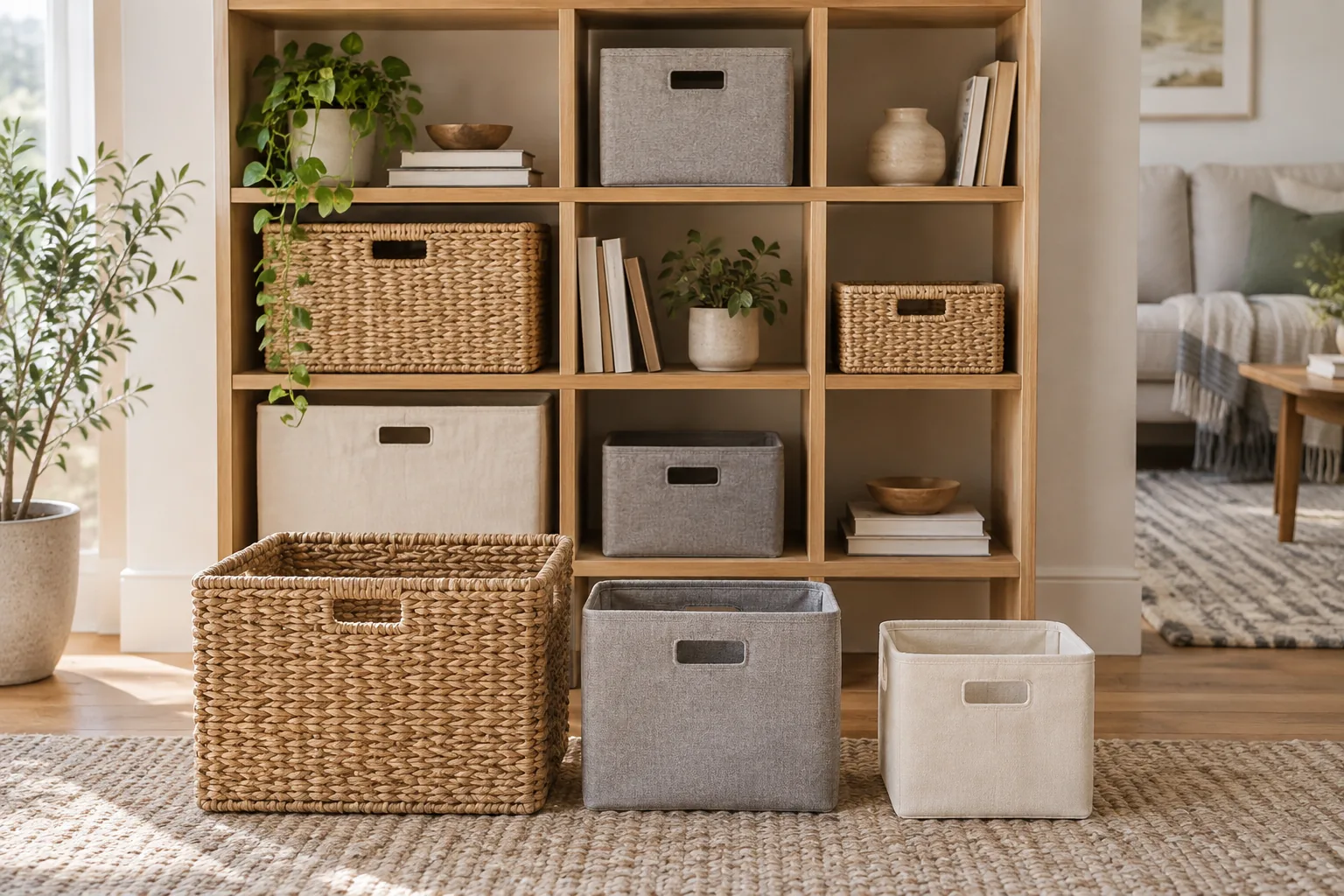
Compare the bins on the same shelf
Choosing bins starts with the space you have and what you want to put away. Keep the shelf measurements and gap unchanged as you try each bin size. The layouts below show how a narrower footprint changes the arrangement, while leaving the practical checks for handles, access, and shelf load limits to you.
Try each set of bin measurements in the shelf-fit calculator, keeping the shelf and gap the same. Sketch where your items would go and check that you can reach them; a larger calculated count alone does not tell you which layout suits your routine.
Primary scenario: inputs and protected results
Usable shelf: 30 × 15 × 12 in. Container: 9 × 7 × 8 in. Gap between adjacent containers: 0.5 in.
Calculated layout: 3 container(s) across × 2 deep = 6 container(s) in one unrotated, unstacked layer.
Remaining width after the calculated columns: 2 in.
Formula explained: divide usable width plus one gap by container width plus one gap, then round down; repeat for depth. The count is across × deep when the container height of 8 in fits within the 12 in clear height, and zero otherwise.
Supplied assumptions: Both hypothetical options use the same rectangular shelf, outside dimensions, clearance, and unstacked layout; only container size changes.
Interpretation limits: Inputs are hypothetical supplied dimensions rather than publisher measurements. The calculation models rectangular containers in one unrotated, unstacked layer. Openings, obstructions, access, strength, stability and safety require separate physical checks.
Narrow container option: inputs and protected results
Usable shelf: 30 × 15 × 12 in. Container: 7 × 7 × 8 in. Gap between adjacent containers: 0.5 in.
Calculated layout: 4 container(s) across × 2 deep = 8 container(s) in one unrotated, unstacked layer.
Remaining width after the calculated columns: 0.5 in.
Formula explained: divide usable width plus one gap by container width plus one gap, then round down; repeat for depth. The count is across × deep when the container height of 8 in fits within the 12 in clear height, and zero otherwise.
Supplied assumptions: Both hypothetical options use the same rectangular shelf, outside dimensions, clearance, and unstacked layout; only container size changes.
Interpretation limits: Inputs are hypothetical supplied dimensions rather than publisher measurements. The calculation models rectangular containers in one unrotated, unstacked layer. Openings, obstructions, access, strength, stability and safety require separate physical checks.
Calculations, assumptions and limits
Primary scenario retains these interpretation limits: Inputs are hypothetical supplied dimensions rather than publisher measurements. The calculation models rectangular containers in one unrotated, unstacked layer. Openings, obstructions, access, strength, stability and safety require separate physical checks.
Narrow container option retains these interpretation limits: Inputs are hypothetical supplied dimensions rather than publisher measurements. The calculation models rectangular containers in one unrotated, unstacked layer. Openings, obstructions, access, strength, stability and safety require separate physical checks.
These calculations use illustrative or reader-entered inputs. They do not verify product fit, shelf strength, product condition, safety, current prices, tax, shipping, financing or availability. Check the result against the actual space and product information.
How this guide was prepared
Calculate how many rectangular containers fit across and through the supplied usable shelf dimensions, reserving the supplied gap only between adjacent containers. Round both directional counts down and multiply them only when the supplied container height fits. Keep units, assumptions and physical-check limits attached. This is not a measurement, fit guarantee, safety check or product recommendation.
Source record
GANAR-CALCULATORS — Own calculation · hypothetical inputs
Hypothetical supplied scenario: columns = floor((30 + 0.5) / (9 + 0.5)); rows = floor((15 + 0.5) / (7 + 0.5)); height must be at least 8 in. Result: 6 container(s), 3 across, 2 deep and 2 in of remaining width. This is arithmetic, not a physical observation or fit guarantee.
Calculated 2026-09-10