A Household Refill Schedule Based on What You Actually Use
Choose one supply and one unit, such as bottles, rolls or ounces. Record opening stock before starting the log.
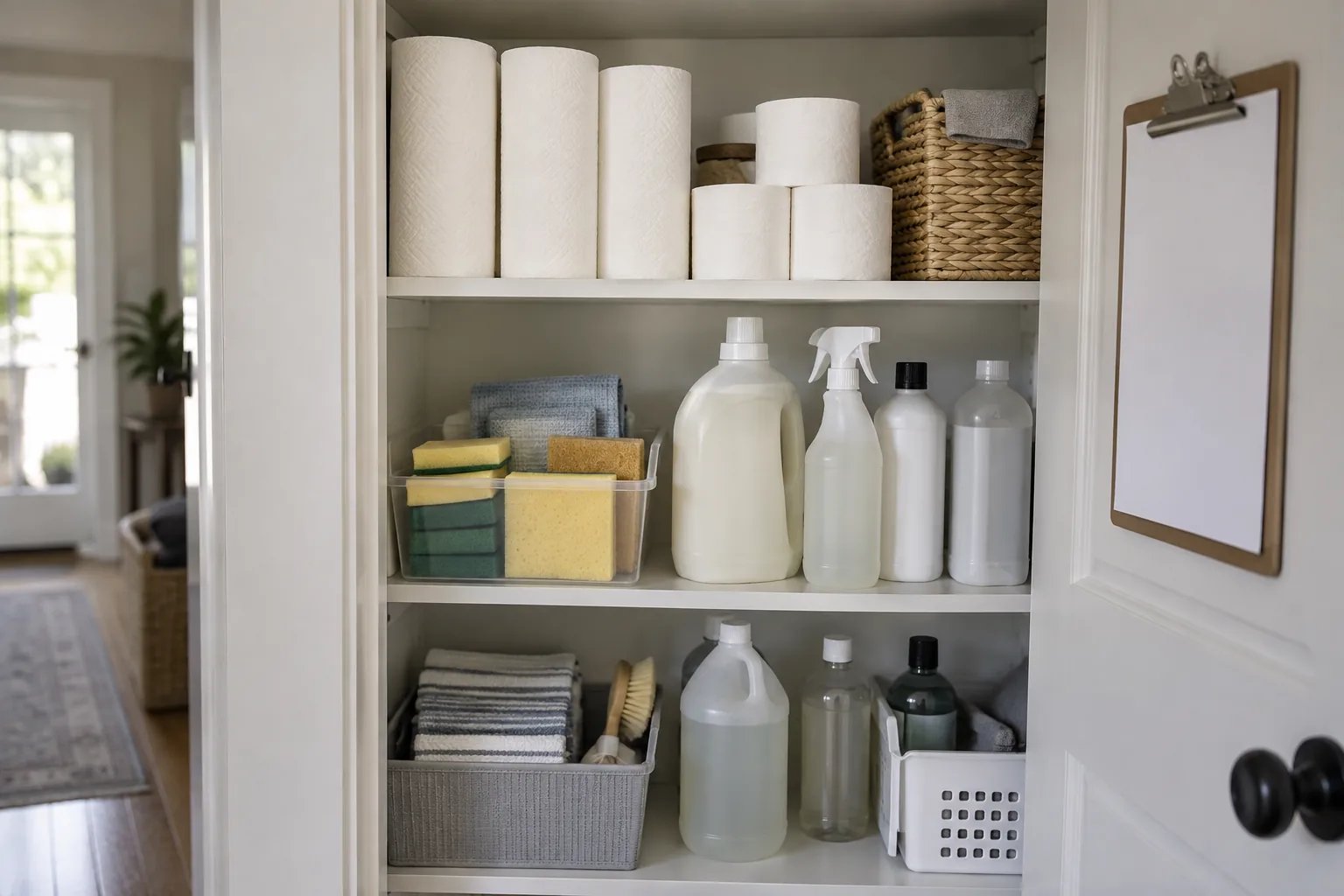
Start with your own situation
Choose one supply and one unit, such as bottles, rolls or ounces. Record opening stock before starting the log.
Work through the record
Write down purchases and closing stock over a dated interval. Separate product used from discarded, spilled or given away; do not treat all stock reduction as routine use.
Your printable worksheet
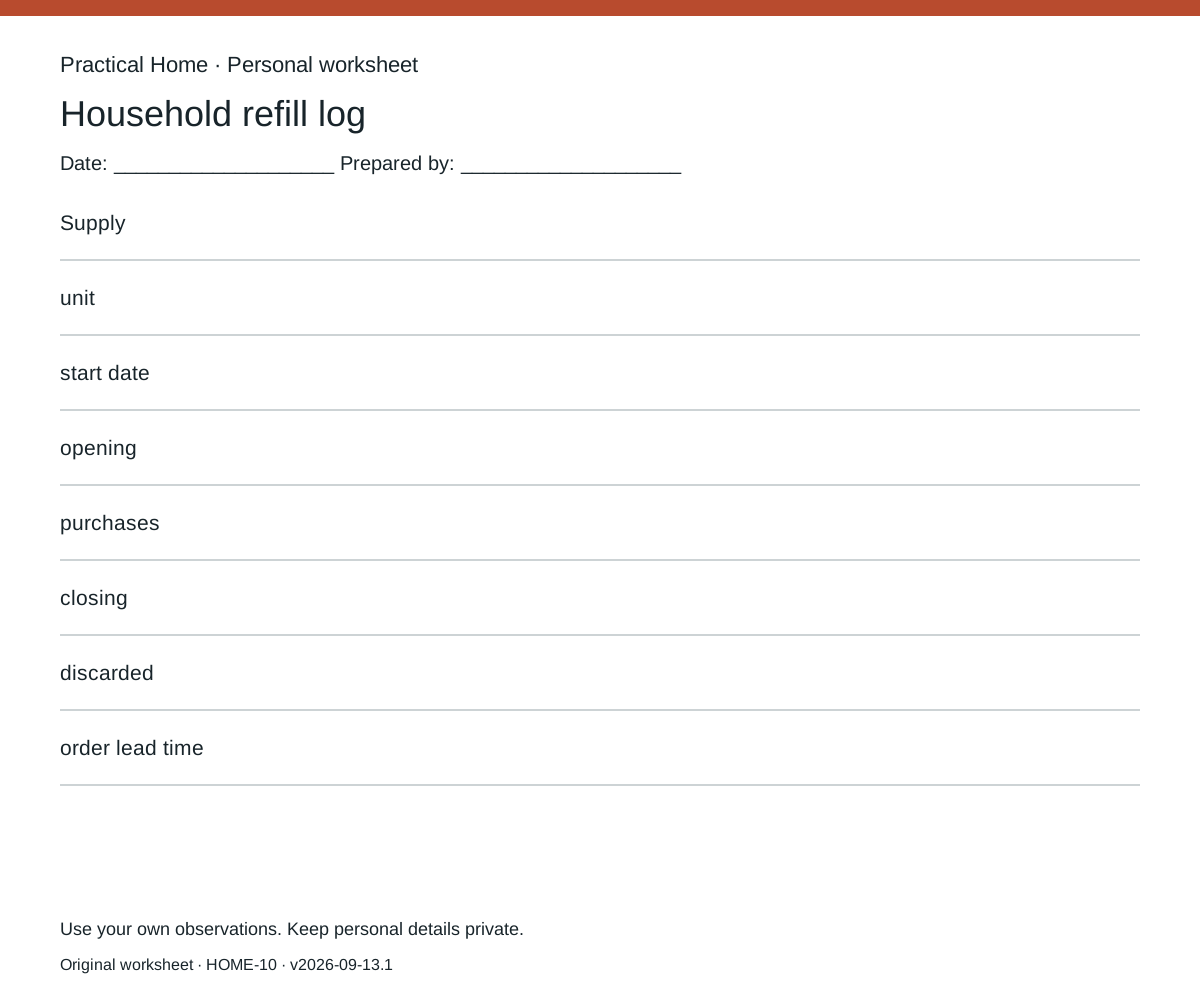
Use one sheet per household refill log record. Fill these fields: Supply / unit / start date / opening / purchases / closing / discarded / order lead time. Leave missing information marked unknown; do not silently substitute an estimate.
Make the next decision
Use the observed interval as a starting estimate and check stock again before ordering. Guests, travel and a new product size can make the previous interval unrepresentative.
Documentary context
NIST describes unit pricing as cost per unit of measure.
How this guide was prepared
Original Codex-assisted planning guidance and a blank worksheet. Reader inputs are not collected or represented as observations. Any documentary context is a short paraphrase of a linked primary source checked on September 13, 2026; no product testing, prices or efficacy results are claimed.
Source record
NIST-V1-UNIT — External record retrieved
NIST describes unit pricing as cost per unit of measure.
Retrieved 2026-09-13